
More Than Just Metal: Telling the Stories of America's Law Enforcement Through Badges
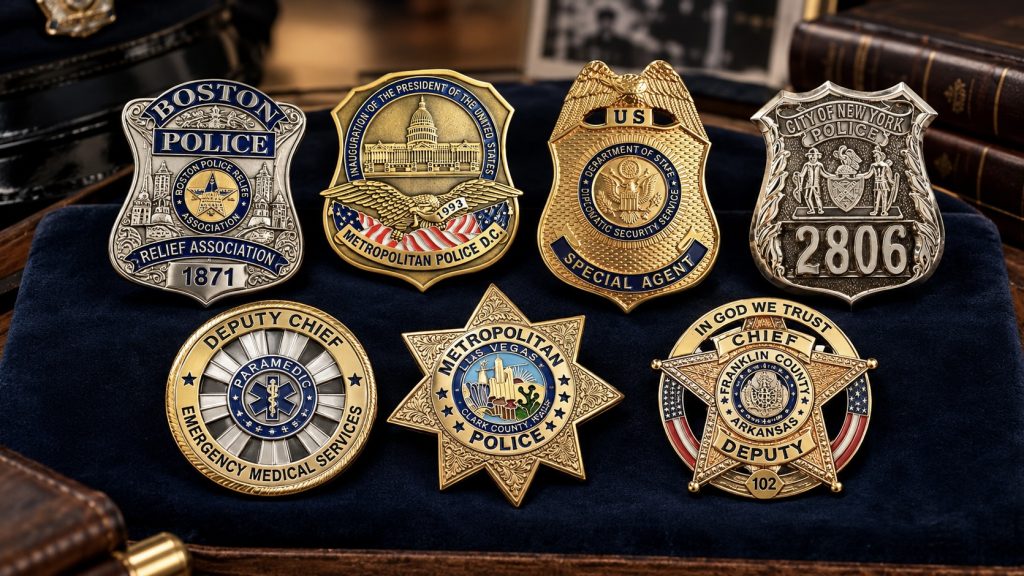
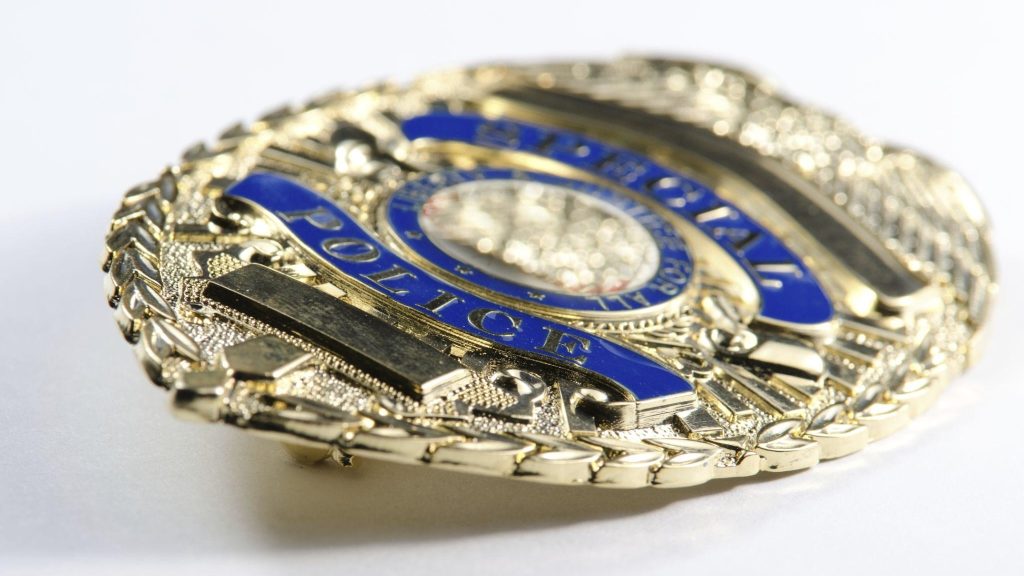
A police badge is deceptively simple. It is a piece of die-struck metal, often no larger than the palm of a hand, finished with enamel and secured by a pin or a screw. Yet, in the hands of a collector, a prop master, or a history enthusiast, it becomes something far more significant. It is a tangible record of jurisdiction, a symbol of authority, and a window into the complex history of American law enforcement.
Over the past several months, our workshop has had the privilege of recreating a diverse collection of these shields. From the sun-drenched streets of Las Vegas to the foggy harbors of San Francisco, and from the highest levels of federal security to the deeply rooted traditions of Native American tribes, each badge we have crafted tells a distinct story.
But behind every crest and motto lies a rigorous manufacturing process. For B2B buyers, film prop masters, and retail distributors, understanding the mechanics of how these badges are made—and the timelines required to produce them—is just as important as the history they represent. Let’s look at what it actually takes to bring a piece of history into the palm of a hand.
The Story in the Metal: Why Details Matter
When we approach a new badge project, we don’t just look at a logo; we look at the heritage it carries. The details are what make a replica feel authentic. Consider the US State Department DSS Badge (Diplomatic Security Service). It features a golden American eagle, a deep blue enamel ring, and a stippled background. When a prop master needs this for a film set, they don’t want a flat, lightweight pin that catches the studio lights incorrectly. They need the weight and the texture of a federal shield. The text “DEPARTMENT OF STATE / DIPLOMATIC SECURITY SERVICE” encircles the central eagle, requiring high-precision die-striking so the letters don’t blur into the blue enamel.
Similarly, local badges carry regional pride. The San Francisco Police Hat Badge is a masterpiece of vintage heraldry. It features the laborer and sailor figures flanking the city seal, and the historic motto “Oro en Paz Fierro en Guerra” (Gold in peace, iron in war). The Las Vegas Metropolitan Police Badge commands attention with its unique seven-point star, detailed leaf engravings, and the city skyline set against a bright blue sky.
To replicate these details, you cannot use cheap plastic or stamped tin. You must use materials that hold an edge.
The Anatomy of a Replica Badge
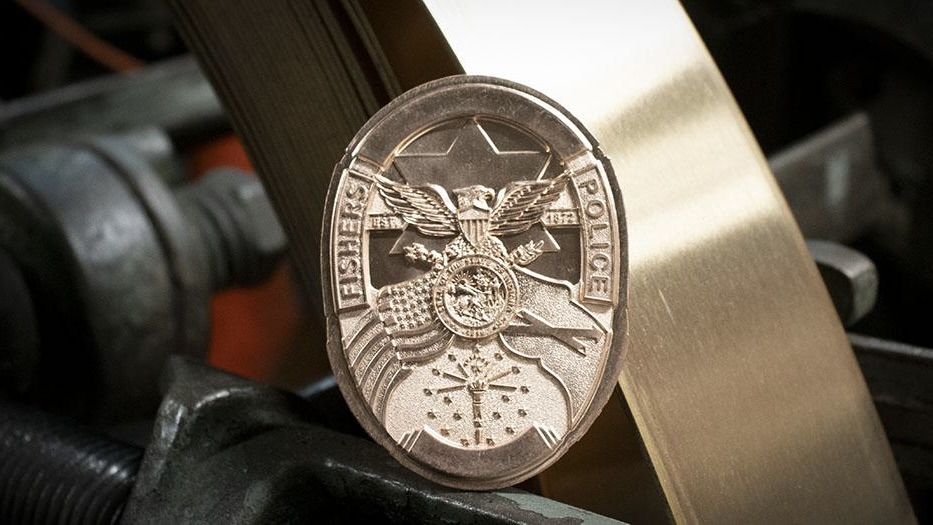
Not all badges are created equal. The difference between a piece of costume jewelry and a collector-grade replica comes down to material and craftsmanship. We start with high-quality Zinc Alloy or Brass. These metals are chosen for their durability, weight, and ability to hold a sharp edge during the die-striking process.
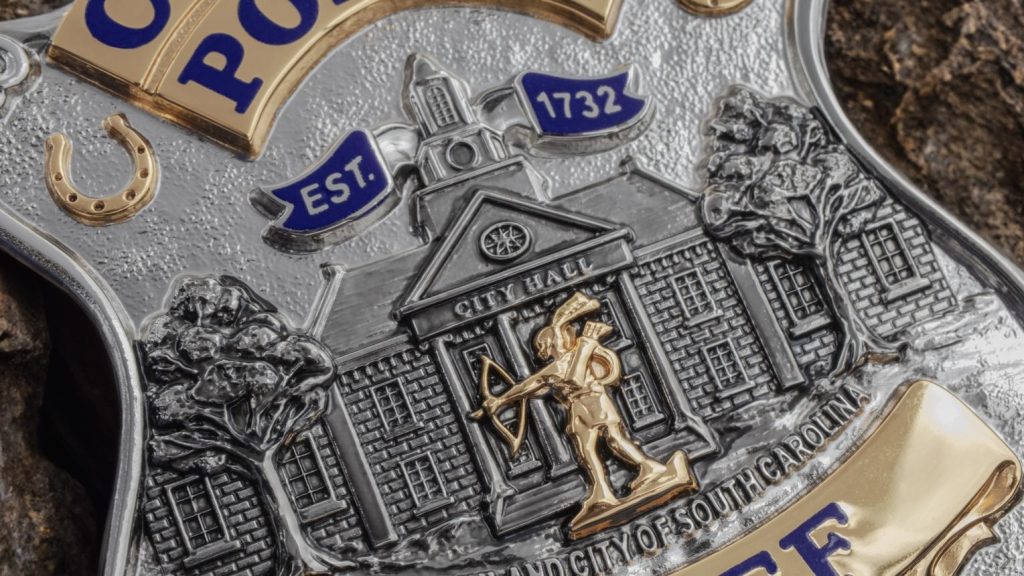
For the finish, we utilize both Soft Enamel and Hard Enamel techniques. Soft enamel leaves a textured, tactile feel where the metal ridges can be felt, which is often preferred for vintage or antique finishes (like the antique gold of the Lowellville Retired Chief 01 Badge). Hard enamel is polished down so the surface is perfectly flat and smooth, mimicking the look of fine jewelry. When combined with Antique Gold, Silver, or Two-Color plating, the finished piece carries the exact presence of a real duty badge.
In terms of size, we standardize our production between 2.0 to 4.0 inches (50–100mm). This range is deliberately chosen. Anything smaller, and the intricate text (like “Diplomatic Security Service” or the Arkansas state seal on the Franklin County Sheriff 102 Badge) becomes unreadable. Anything larger, and the badge becomes too heavy to comfortably wear on a costume or display board.
| Parameter | Specification |
|---|---|
| Material | High-quality Zinc Alloy / Brass (Lead-free, eco-friendly, and durable) |
| Craftsmanship | Die Struck with Soft Enamel or Hard Enamel (Polished flat) |
| Plating Options | Gold / Antique Gold / Silver / Antique Silver / Black Nickel / Two-Tone |
| Size | Standard 2.0 – 4.0 inches (50–100mm) / Fully Customizable |
| Thickness | 3mm – 5mm (Provides authentic heft and depth) |
| Backing Type | Safety Pin / Butterfly Clutch / Magnetic / Screw Back |
| MOQ | 50 pcs (Small Batch) / 100 pcs (Wholesale) / 500 pcs (Standard) |
| Production Lead Time | 10–15 Business Days (After artwork and sample approval) |
| Sample Lead Time | 3–5 Business Days |
| Packaging | Poly Bag / Velvet Pouch / Custom Backing Card / Premium Gift Box |
Where These Badges Go: Applications & Procurement Guide
The modern demand for replica badges stretches far beyond the traditional collector’s display case. We supply everyone from Hollywood prop houses to local museums. But different buyers have very different needs.
For Film, TV, and Theater Production, prop masters require badges that look authentic on camera. A lightweight plastic badge is instantly recognizable on a 4K screen. They need die-struck metal with accurate weight, realistic enamel colors, and a secure backing that won’t fail during a fast-paced action scene. Because actors often wear cheap, lightweight fabric, the badge must also be balanced—heavy enough to look real, but not so heavy that it drags down a costume collar.
For Museums and Heritage Centers, replicas are sold as high-end souvenirs. A tourist visiting the San Francisco Maritime Museum isn’t looking for a cheap keychain; they want a heavy, 4-inch vintage SFPD Hat Badge that honors the city’s gold rush history. These venues require premium packaging—velvet pouches or gift boxes—to match the elevated price point of a museum gift shop.
For Collectors and Law Enforcement Enthusiasts, the appeal lies in the absolute details. They scrutinize the state seals, the badge numbers, and the precise layout of the text. Providing accurate, high-quality replicas builds trust and drives repeat business across different agencies and eras. They often prefer magnetic or screw-back fittings to preserve the backing of their display boards.
| Application Scenario | Target Audience | Recommended Spec / Finishes |
|---|---|---|
| Film, TV & Theater Props | Prop masters, costume designers | Die-struck metal, Hard Enamel (no glare), Butterfly clutch for quick changes. |
| Museum & Heritage Souvenirs | Tourists, local gift shops | 3.0–4.0 inches, Antique Gold/Silver plating, packaged in velvet pouches or gift boxes. |
| Collector Market | Law enforcement memorabilia collectors | High-detail 3D relief, Two-Tone plating, Magnetic or screw-back fittings. |
| Costume & Cosplay Retail | Party goers, cosplayers | Lightweight zinc alloy, vibrant soft enamel, safety pin backing, custom retail cards. |
Timelines and Minimums: Planning Your Production
Whether it’s a small batch of 50 custom badges for an indie film or a 500-piece run for a museum, planning is critical. We maintain a flexible MOQ of 50 pieces to support small creators and independent prop houses, while our standard wholesale runs start at 100 to 500 pieces to significantly reduce the per-unit cost.
Once the artwork is finalized, our standard production lead time is 10 to 15 business days. However, buyers must factor in shipping and customs clearance. If you are aiming for a specific deadline—like a movie shoot start date or a museum grand opening—the actual timeline starts long before the factory machines begin to run. Artwork proofing and physical sample approvals usually take an additional 3 to 5 business days.
The most avoidable mistake in the industry is ordering too late. For a major holiday or a film production, we advise locking in the concept and artwork at least 6 to 8 weeks in advance. This ensures there is plenty of time for mold creation, adjustments, and safe delivery.
FAQ: The Sourcing Details
To make your procurement process smoother, here are the most common questions we receive from B2B buyers.
Q: What materials are these badges made from?
A: We primarily use high-grade Zinc Alloy and Brass. They are lead-free, eco-friendly, and provide an excellent surface for die-struck detailing and enamel filling. They are designed to resist tarnishing and wear over time.
Q: Can the badges be fully customized?
A: Yes. We offer complete OEM/ODM services. You can customize the design, size, plating color (Gold, Silver, Antique, Black Nickel), backing type, and even add custom text or individual badge numbers engraved on the back.
Q: What are the backing options?
A: We offer safety pins, butterfly clutches, magnetic backing, and screw-back fittings. For film costumes or lightweight fabrics, the butterfly clutch is standard. For collectors’ display boxes or heavy wool uniforms, magnetic or screw-back fittings are highly recommended.
Q: What is the standard production time?
A: After artwork approval and physical sample confirmation, our standard production time is 10–15 business days. Rush orders can be discussed depending on factory capacity, but standard timelines guarantee the best quality control.
Q: Do you offer packaging for retail?
A: Yes. We provide poly bags for bulk shipping, as well as custom-designed velvet pouches, branded backing cards, and premium gift boxes for retail-ready merchandise. Packaging can be customized to fit the specific aesthetic of your brand.
Q: How do you ensure the text is readable at these sizes?
A: When reviewing artwork, our engineers check the line weight and font size. If a text element is too small to be cleanly cast during die-striking, we will advise enlarging the badge or simplifying the text to ensure it remains crisp and legible. This proactive proofing saves our clients from costly mold remakes.
The Final Word
A badge is a piece of history, but it takes precise engineering to make that history tangible. From the federal shield of the DSS to the sun-baked star of Las Vegas, these badges are a conversation between past and present. By balancing authentic materials, accurate sizing, and a thoughtful production schedule, manufacturers can bring the stories of America’s law enforcement to life—whether on a movie screen, in a museum, or in a collector’s hands.
Ready to start your next badge project? Contact us to discuss your requirements, request physical samples, and get competitive pricing for your next run.